
Liveries
Air France and the Winged Seahorse
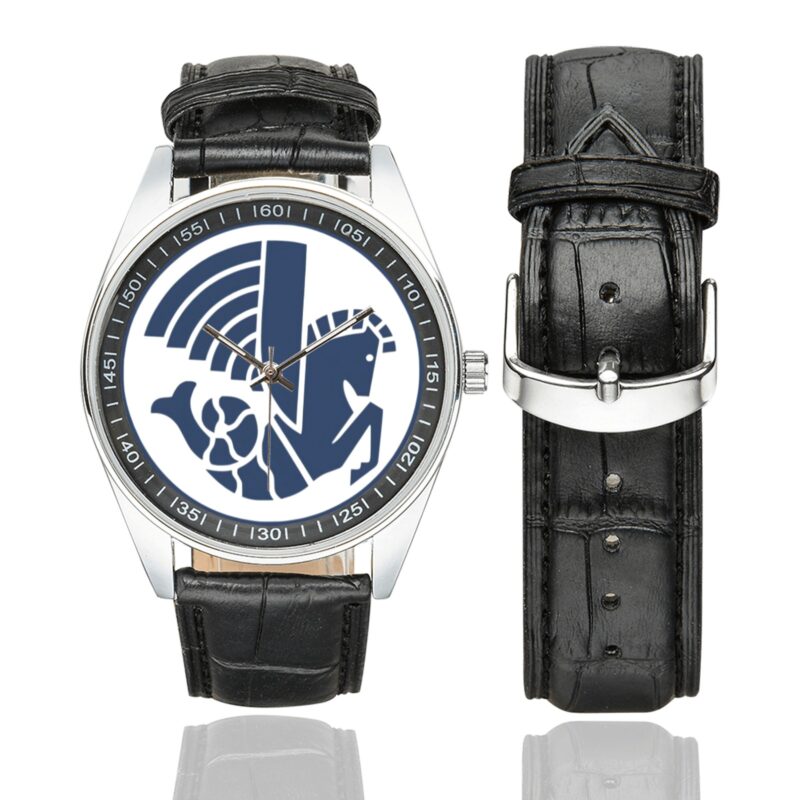
Plenty of airlines put a bird or an arrow on the tail. Air France chose a creature that never existed: a horse’s head and mane, a pair of wings, and a fish-like tail curling underneath. The winged seahorse (in French, hippocampe ailé) is a distinctive symbol in airline design, and it is older than Air France itself.
An emblem inherited from Air Orient
The seahorse did not start with Air France. It belonged first to Air Orient, a French carrier that, according to both Wikipedia and One Mile at a Time, began operating in 1929. When the French government pushed the country’s main airlines to combine in 1933, Air Orient was one of the companies folded into the new national carrier. Wikipedia gives August 30, 1933 for the company’s creation and October 7 for the start of operations, which is why different histories quote both dates.
Along with the aircraft and routes, the new airline took over Air Orient’s emblem. One Mile at a Time puts it simply: the logo came from Air Orient and Air France kept it. It was a practical choice. The symbol already looked striking on a fuselage, and it gave the merged company a visual identity from day one.
What the creature is made of
The seahorse is a mythological mash-up. The French aviation site Gate7 describes it as the front of Pegasus, the winged horse of Greek legend, joined to the rear of the Annam dragon, which explains the forked tail. A being born of air and sea also suited the era, when airlines operated flying boats and seaplanes alongside land aircraft.
One Mile at a Time offers a related story: Air Orient’s founders reportedly disagreed over whether airplanes or seaplanes were the better future, and the emblem was meant to show an airline at home over water as well as in the sky. Treat that as the commonly told version rather than a documented decision. Sources also disagree on who drew it. Gate7 credits the company architect Marrast and the poster artist Robert Couaillier, while other sources point to Air Orient’s management. We will not name a definitive designer.
“The prawn”
Gate7 reports that Air France staff affectionately call the seahorse la crevette, “the prawn.” With its curled tail and arched back, it does bear a passing resemblance to one.
From propeller days to the jet age
For decades, the seahorse was the face of Air France. Gate7 notes that it appeared on aircraft noses and on the company’s offices and equipment in the 1930s, and that it was still visible on the Boeing 707 and the Caravelle when jets arrived. For fans of retro design, that continuity matters: the same simple blue-and-white shape rode on everything from piston-engine airliners to early jets, adapting to different fuselages and tail fins along the way.
Air France’s paint schemes shifted over the years, but the seahorse remained the anchor of its identity for more than four decades.
The tricolor era
The seahorse’s long run as the airline’s main mark ended in the 1970s. Logo Heritage places the switch to a geometric blue, white and red symbol in 1976, while Gate7 ties the tricolor livery to the arrival of Concorde in the mid-1970s. Sources differ slightly on the year, so “mid-1970s” is the safest description. In any case, the airline moved to a modern, abstract, tricolor look that reflected the French flag, and the seahorse stepped back.
Logo Heritage then traces a series of refinements to that tricolor identity, in 1990, 1998, 2009 and 2016. Gate7 adds that with the 2009 identity the seahorse became more discreet, appearing mainly on engines rather than as the headline logo.
Still flying as a heritage emblem
The seahorse did not vanish with the change. One Mile at a Time reported in April 2025 that Air France uses it on aircraft fuselages, engine cowlings and wingtips, as well as on seat branding, in lounges and on inflight service items, and that the airline has been featuring it more and more. Logo Heritage likewise describes it as a secondary heritage emblem.
For aviation fans, that makes it a livery detail you can spot on a modern jet and, at the same time, a direct link to 1930s Paris and the golden era of French air travel.
Bring the seahorse home
If the winged seahorse is your favorite piece of airline design, our fan-made collection has several ways to enjoy it. Take a look at the Air France 1933 vintage logo watch, the Air France vintage logo watch or the second vintage logo design. You can also browse the full aviation watch collection.
Airlines TShirts is an independent fan store. Our products are not affiliated with or endorsed by any airline.
Sources
- “The Story Of Air France’s Iconic Winged Seahorse Logo”, One Mile at a Time, April 2, 2025. onemileatatime.com
- “1933 – 2023, 90 ans d’Air France sous le signe de l’hippocampe”, Gate7, September 19, 2023. gate7.online
- “Air France Logo History: Meaning, Symbolism & Brand Heritage”, Logo Heritage (undated; third-party archive, used only for the logo-change years). logoheritage.com
- “Air Orient”, Wikipedia, consulted November 7, 2026 (orientation and cross-checking of dates only). en.wikipedia.org
